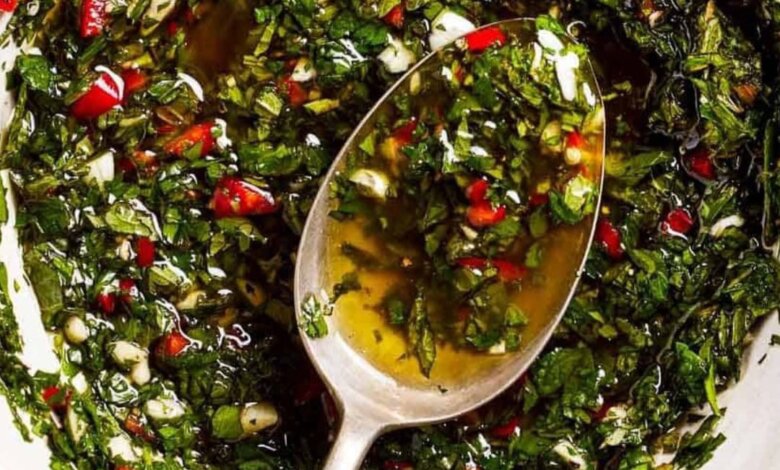
Classic Argentinian Chimichurri Sauce
A bold, zesty kick for grilled meats, veggies, sandwiches & more
Yield: About 1¼ cups
Prep Time: 10 minutes
Rest Time: 30 minutes (essential for flavor)
Ingredients
1 cup fresh flat-leaf parsley, very finely chopped
4–5 garlic cloves, minced or grated
1 teaspoon red chili flakes (adjust to taste)
1 teaspoon dried oregano
¾–1 teaspoon salt, to taste
½ cup extra-virgin olive oil
2 tablespoons red wine vinegar
2–3 tablespoons warm water (traditional and important)
Optional but Traditional Add-Ins
1 tablespoon fresh cilantro (not traditional everywhere, but popular)
1 tablespoon very finely minced red onion or shallot
A squeeze of fresh lemon juice (optional brightness)
½ teaspoon smoked paprika (modern variation)
Instructions
Prepare the Herbs
Wash parsley thoroughly and dry completely.
Finely chop by hand (avoid food processors for authentic texture).
Build the Flavor Base
In a medium bowl, combine:
Parsley
Garlic
Chili flakes
Oregano
Salt
Add Liquids
Pour in red wine vinegar and warm water.
Stir well to dissolve salt and activate dried herbs.
Finish with Olive Oil
Slowly drizzle in olive oil while stirring.
Mix until fully combined but not emulsified (chimichurri should look rustic).
Rest & Infuse
Cover and let sit at room temperature for 20–30 minutes.
Taste and adjust salt, vinegar, or chili.
How to Use Chimichurri
Spoon over grilled steak (asado), chicken, lamb, or sausages
Drizzle on roasted potatoes or vegetables
Spread on sandwiches, burgers, wraps
Serve with crusty bread
Amazing on tofu, beans, or grilled mushrooms
Why You’ll Love It
Fresh & antioxidant-rich (parsley + garlic)
Naturally energizing with chili heat
Heart-healthy fats from olive oil
Incredibly versatile — one sauce, endless uses
Storage Tips
Store in an airtight jar in the refrigerator for up to 7 days
Bring to room temperature before serving
Flavor gets better after 24 hours
Soulful Tip
Chimichurri isn’t meant to be smooth or perfect —
it’s wild, vibrant, and alive, just like Argentine grilling culture.
Serve it generously, share it proudly, and let every bite tell a story