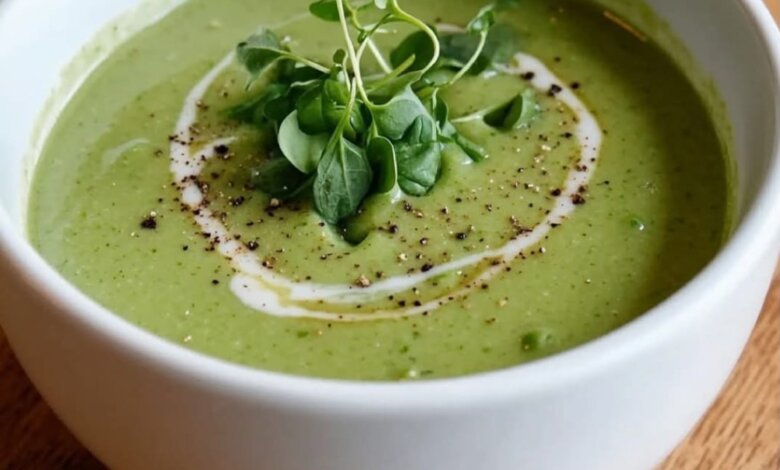
Velvety Green Pea Soup
A smooth, comforting soup that’s fresh, elegant, and easy to love.
Ingredients (Serves 3–4)
For the Soup
2 cups green peas (fresh or frozen)
1 small onion, finely chopped
1 garlic clove, minced
2 to 2½ cups vegetable broth (hot)
1 tablespoon olive oil
½ teaspoon salt (adjust to taste)
¼ teaspoon black pepper
¼ teaspoon ground cumin or thyme (optional, for depth)
1 tablespoon fresh lemon juice (optional, for brightness)
Optional Add-Ins (Choose One or More)
¼ cup heavy cream, coconut milk, or plain yogurt (for extra creaminess)
1 small potato, peeled and diced (for thicker texture)
A handful of fresh mint, basil, or parsley
For Garnish (Optional but Lovely)
Swirl of cream or olive oil
Microgreens, chopped herbs, or pea shoots
Freshly cracked black pepper
Croutons or toasted bread on the side
Step-by-Step Instructions
1️⃣ Sauté the Base
Heat the olive oil in a medium pot over medium heat.
Add the chopped onion and sauté for 4–5 minutes, stirring occasionally, until soft and translucent (do not brown).
Add the minced garlic and cook for 30 seconds until fragrant.
2️⃣ Build the Soup
Add the green peas (and diced potato if using).
Pour in the hot vegetable broth, just enough to cover everything.
Bring to a gentle boil, then reduce to a simmer.
3️⃣ Simmer
Let the soup simmer uncovered for 10–15 minutes, until the peas are tender and bright green and the potato (if used) is fully soft.
4️⃣ Blend Until Silky
Remove the pot from heat.
Blend the soup using:
an immersion blender directly in the pot, or
a regular blender (blend in batches and be careful with hot liquid)
Blend until completely smooth and velvety.
5️⃣ Season & Finish
Return soup to low heat.
Stir in salt, pepper, optional spices, and lemon juice.
Add cream or coconut milk if using.
Taste and adjust seasoning as needed.
To Serve
Ladle into warm bowls.
Top with a swirl of cream or olive oil, fresh herbs, and microgreens.
Serve with crusty bread or grilled toast for a complete meal.
Helpful Tips
Too thick? Add a splash of broth or warm water.
Too thin? Simmer a few more minutes or add a spoon of mashed potato.
Extra smooth texture: Strain through a fine sieve after blending.
Make it fancy: Add a drizzle of herbed oil or a pinch of lemon zest on top.
Why This Soup Is a Great Choice
Naturally nourishing and filling
Light yet comforting
Simple ingredients with fresh flavor
Perfect for lunch, dinner, or a cozy starter