Grandma Pat’s Creamy Chicken Bacon Ranch Lettuce Wraps (Low Carb Potluck Favorite)

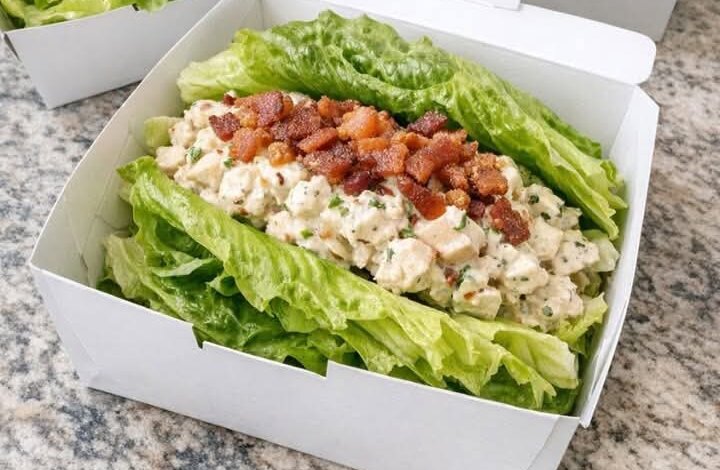
Grandma Pat’s Creamy Chicken Bacon Ranch Lettuce Wraps (Low Carb Potluck Favorite)
Grandma Pat had a simple trick at every church potluck: show up with a big tray of “sandwiches,” and leave with an empty dish and a dozen requests for the recipe. These low carb chicken bacon ranch lettuce wraps are my version of her classic idea—creamy, smoky, and satisfying enough that nobody even thinks about the bread.
Instead of rolls or buns, crisp lettuce leaves hold a rich chicken and bacon filling mixed with ranch flavor. They’re light enough for a snack, but hearty enough to keep people coming back for seconds (and thirds).
Perfect for make-ahead meals, potlucks, picnics, or busy weeknight dinners, these wraps are easy to assemble and even easier to disappear.
Low Carb Chicken Bacon Ranch Lettuce Wraps
Yield: 18–24 wraps (depending on lettuce size)
Ingredients
3 cups cooked chicken, shredded or chopped
8–10 slices cooked bacon, crumbled
1 cup cream cheese, softened
1/2 cup ranch dressing
1/2 cup shredded cheddar cheese
2–3 tablespoons chopped green onions (optional)
1/2 teaspoon garlic powder
Salt and black pepper, to taste
1 large head romaine or butter lettuce (washed and separated into leaves)
Instructions
Make the filling:
In a large bowl, mix the cream cheese, ranch dressing, garlic powder, salt, and pepper until smooth and creamy.
Add the good stuff:
Fold in the shredded chicken, crumbled bacon, cheddar cheese, and green onions. Stir until everything is evenly coated and thick.
Chill for flavor (optional but better):
Cover and refrigerate for 20–30 minutes so the flavors blend together.
Assemble the wraps:
Spoon the chicken bacon ranch mixture into individual lettuce leaves. Don’t overfill—just enough for a hearty bite or two.
Serve:
Arrange on a platter or pack into containers for easy serving.
🍽️ Serving Ideas
These wraps are delicious on their own, but they really shine on a potluck table alongside:
Sliced cucumbers and tomatoes
Crunchy coleslaw
Pickles or pickle spears
Deviled eggs
Roasted green beans or asparagus
Extra ranch for dipping
Grandma Pat’s Tip
“Always make more than you think you need,” she used to say—because the first tray is always just the warm-up round.