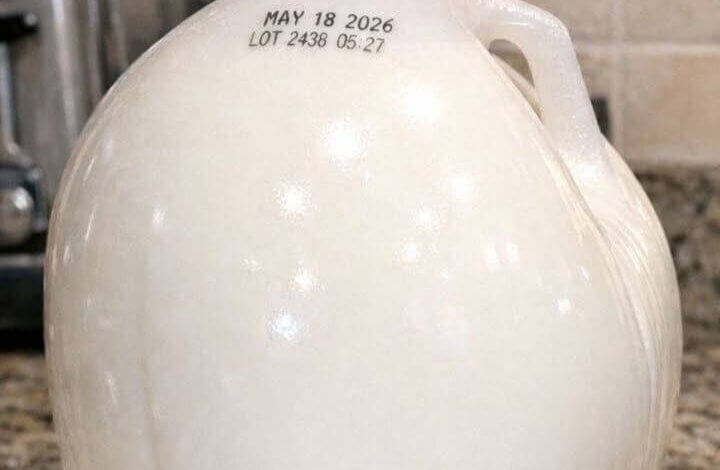
Bought a Milk Jug That’s Swollen? Here’s Why You Should Never Ignore It
You bought a gallon of milk just a few days ago. The expiration date is still well in the future. You reach into the refrigerator, grab the jug, and immediately notice something strange—it feels hard and swollen, almost like a balloon ready to burst.
Would you still pour yourself a glass?
Many people assume that if the date hasn’t passed, the milk must be safe. Unfortunately, that’s not always true. A bloated milk container is one of the strongest warning signs that something has gone wrong, and ignoring it could leave you with more than just a bad-tasting drink.
Here’s everything you need to know before you twist that cap.
1. A Swollen Milk Jug Is Never Normal
Milk containers are designed to keep fresh milk sealed under normal pressure. If the jug suddenly becomes puffed up or tight like a drum, gases have likely built up inside.
The most common reason is bacterial growth. As bacteria multiply, they consume sugars in the milk and release gases such as carbon dioxide. Since the container is sealed, those gases have nowhere to escape, causing the plastic jug to expand.
Even if the milk still looks white, pressure inside the container means the product has likely begun spoiling.
2. The Expiration Date Isn’t a Safety Guarantee
Many shoppers believe the printed date tells them exactly when milk becomes unsafe.
It doesn’t.
Most milk cartons display a sell-by, best-by, or use-by date. These dates are quality guidelines rather than absolute safety deadlines.
Milk can spoil before the printed date if:
It wasn’t kept cold during transportation.
It sat too long in a warm shopping cart.
The refrigerator temperature is above 40°F (4°C).
The container was accidentally contaminated.
That’s why the condition of the milk always matters more than the calendar.
3. Inspect the Jug Before Opening
Before breaking the seal, examine the container carefully.
Look for:
A bulging or bloated shape.
A raised cap.
Cracks or leaks.
Damage around the seal.
Signs that the container may have been opened previously.
If anything appears unusual, treat the milk as spoiled.
4. Should You Smell or Taste It?
Many people rely on the old “smell test.”
A sour smell certainly indicates spoiled milk.
However, don’t taste milk from a swollen container just to check if it’s okay. While smell and appearance can provide clues, tasting potentially spoiled milk isn’t recommended because harmful bacteria may be present even before strong odors develop.
If the jug is swollen, it’s safer to assume the milk has gone bad.
5. Why Milk Can Spoil So Quickly
Several things can shorten milk’s shelf life:
Refrigerator temperatures that are too warm.
Long trips home from the grocery store.
Power outages.
Leaving milk on the counter.
Cross-contamination from dirty cups or hands.
Problems during manufacturing or distribution.
Even one break in the cold chain can allow bacteria to multiply rapidly.
6. What Happens If You Drink Spoiled Milk?
Not everyone becomes sick after drinking spoiled milk, but it’s a risk that’s not worth taking.
Possible symptoms include:
Nausea
Vomiting
Stomach cramps
Diarrhea
Upset stomach
Young children, older adults, pregnant women, and people with weakened immune systems are especially vulnerable to foodborne illness.
7. What Should You Do With a Swollen Jug?
If your milk jug is swollen:
Do not drink it.
Avoid tasting it.
Dispose of it safely.
Wash your hands if the milk leaks.
Clean any refrigerator shelves if contamination occurred.
If you bought it recently, save your receipt if possible. Many grocery stores will replace spoiled dairy products or offer a refund.
8. Check Your Refrigerator Temperature
Your refrigerator should stay at 40°F (4°C) or below.
If food spoils frequently, use a refrigerator thermometer to verify the temperature. Even a few degrees too warm can dramatically shorten the life of milk and other dairy products.
Store milk toward the back of the refrigerator rather than in the door, where temperatures fluctuate every time it’s opened.
9. How to Keep Milk Fresh Longer
A few simple habits can make a big difference:
Refrigerate milk immediately after shopping.
Keep grocery trips short, especially in hot weather.
Return milk to the refrigerator promptly after pouring.
Avoid storing milk in the refrigerator door.
Never drink directly from the jug.
Keep the cap tightly closed.
These small steps help reduce bacterial contamination and preserve freshness.
10. The Bottom Line
A swollen milk jug should always be taken seriously—even if the expiration date is still days away. Gas buildup inside the container is a strong sign that bacteria have multiplied and the milk has likely spoiled.
When it comes to dairy products, trust the condition of the container more than the date on the label. Throwing away one gallon of milk is far better than risking food poisoning.
When in doubt, don’t drink it. Your health is worth far more than the cost of replacing a carton of milk.