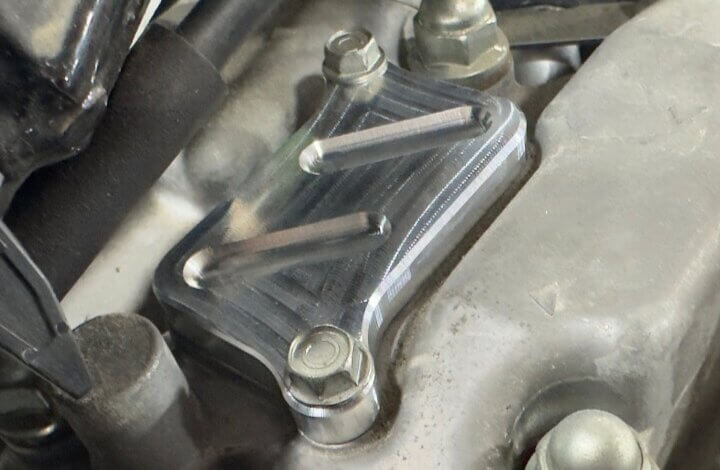
The $5 PAIR Valve Delete Hack for the Honda VTX1300 — Is It Really Better Than Block-Off Plates?
If you own a Honda VTX1300, you’ve probably heard about removing or disabling the PAIR system. Many riders install expensive-looking metal block-off plates, but one VTX owner asked a simple question:
“Why not just use vacuum caps?”
That question led to a much cheaper PAIR valve delete method that cost only about $5.
What Is the PAIR System?
The PAIR system—also called the Pulse Secondary Air Injection system—is an emissions-control system.
Its job is to introduce fresh air into the exhaust system. This helps burn leftover fuel in the exhaust gases and reduce emissions.
On the Honda VTX1300, the system uses hoses and valves connected to the cylinder heads, airbox, and vacuum system.
Some owners choose to remove the system because:
It simplifies the engine bay.
It removes extra hoses and components.
It can make maintenance easier.
It may reduce the popping commonly associated with aftermarket exhaust systems.
It gives the motorcycle a cleaner appearance.
However, removing the PAIR system must be done correctly.
The Cheap $5 Method
Instead of buying a complete PAIR block-off kit, some riders use inexpensive vacuum caps and rubber plugs to seal the appropriate openings.
The basic idea is:
Remove the PAIR system and properly seal every opening that is no longer being used.
The important part is understanding that not every opening should be sealed with the same type of plug.
What You May Need
Depending on the exact setup of your VTX1300, you may need:
Vacuum caps
Suitable rubber plugs
Hose clamps or small clamps
Basic hand tools
New gaskets or O-rings if required
Metal block-off plates for the cylinder-head PAIR ports, if necessary
Important: Do not use an ordinary soft rubber vacuum cap directly on a port that is exposed to extreme exhaust heat. High-temperature areas require appropriate metal sealing components.
Step-by-Step PAIR System Removal
1. Prepare the Motorcycle
Park the motorcycle on a stable surface and allow the engine to cool completely.
Turn the ignition off and disconnect the battery if necessary.
Because the PAIR system is located around the engine and under the fuel tank area, you may need to remove or lift the fuel tank to gain access.
2. Identify the PAIR Components
Locate:
The PAIR valve assembly
The hoses leading toward the front and rear cylinder heads
The vacuum hose connected to the system
The hose connected to the airbox
Take a few pictures before removing anything. This makes it easier to understand where everything was connected.
3. Remove the PAIR Hoses
Disconnect the hoses connected to the PAIR system.
If the hoses are old, cracked, or hardened, this is a good time to replace any vacuum lines that you plan to keep.
Once the PAIR system is removed, you will have several openings that must be properly sealed.
4. Seal the Cylinder-Head Ports Correctly
This is the most important part.
The PAIR system connects to the cylinder heads, which are exposed to high engine and exhaust temperatures.
For that reason, ordinary rubber vacuum caps should not be used directly on hot cylinder-head PAIR ports unless the material is specifically designed for that application.
The safer and more reliable method is to use:
Metal block-off plates
These plates are designed to seal the PAIR openings on the cylinder heads.
They provide:
Better heat resistance
A more secure seal
A cleaner appearance
Better long-term reliability
If using replacement plates, always install the correct gasket or sealing surface required for your specific VTX1300 setup.
5. Cap the Vacuum Port
Once the PAIR vacuum hose is removed, the vacuum port must be sealed.
Use a properly sized vacuum cap that fits tightly.
A vacuum leak can cause:
Poor idle quality
Difficult starting
Lean running conditions
Poor throttle response
Erratic engine behavior
Make sure the cap is secure and cannot fall off or crack.
6. Seal the Airbox Connection
If the hose leading to the airbox is removed, the unused airbox opening must also be sealed.
Use a properly sized rubber plug or cap designed for the temperature and location of that connection.
Do not leave an open hole in the airbox because it can allow unfiltered air into the intake system.
7. What About the T-Fitting?
Some VTX1300 PAIR setups have a T-fitting connected to the system.
If the T-fitting is no longer being used, the unused port must be properly capped.
This is one of the places where a properly sized vacuum cap or rubber plug may be suitable, depending on the location and temperature exposure.
The key is to make sure:
Every unused vacuum or air passage is sealed.
Why Some Riders Prefer the $5 Method
The main advantages are:
Low cost
A basic kit of vacuum caps and plugs can cost only a few dollars.
No waiting
You may be able to buy the required parts locally instead of waiting weeks for a specialized kit.
Simple
The process can be straightforward for someone comfortable working on motorcycles.
Cleaner engine area
Removing unnecessary hoses and valves can make the area around the engine look much cleaner.
The Biggest Mistake to Avoid
The biggest mistake is assuming that every PAIR opening can simply be plugged with a rubber cap.
That is not necessarily true.
Some openings are exposed to much higher temperatures than others.
Use appropriate components:
Location
Recommended sealing method
Cylinder-head PAIR ports
Metal block-off plates or heat-rated sealing components
Vacuum ports
Proper vacuum caps
Airbox connection
Correctly sized rubber cap or plug
Unused T-fitting port
Properly sized cap suitable for that location
Will Removing the PAIR System Make More Power?
Usually, PAIR removal is not a major performance upgrade by itself.
The main reasons riders remove the system are:
Simpler maintenance
Cleaner appearance
Fewer hoses and components
Reduced exhaust popping in some setups
Easier troubleshooting
If the motorcycle has aftermarket exhaust and air-intake modifications, the fuel mixture may also need to be properly adjusted.
After the Installation
Before starting the engine, carefully check:
All vacuum ports are sealed
No hose is accidentally left disconnected
The airbox has no open holes
The cylinder-head ports are properly sealed
No rubber cap is touching an excessively hot surface
All clamps and fittings are secure
Then start the engine and allow it to idle.
Check for:
Vacuum leaks
Unusual noises
Exhaust leaks
Poor idle quality
New running problems
After a short ride, inspect everything again.
Final Thoughts
The $5 PAIR delete idea is attractive because it is cheap, simple, and avoids waiting for an expensive kit.
However, the important lesson is this:
Use vacuum caps only where vacuum caps are appropriate.
For the hot PAIR ports on the cylinder heads, a proper metal block-off solution is generally the safer long-term choice.
For the vacuum lines, airbox connections, and unused fittings, properly sized caps and plugs can provide an inexpensive and clean solution.
For a Honda VTX1300, the best approach is often a combination of both:
Metal block-off plates where heat is a concern
Inexpensive vacuum caps where they are appropriate
That gives you a clean, reliable PAIR delete without spending more money than necessary.