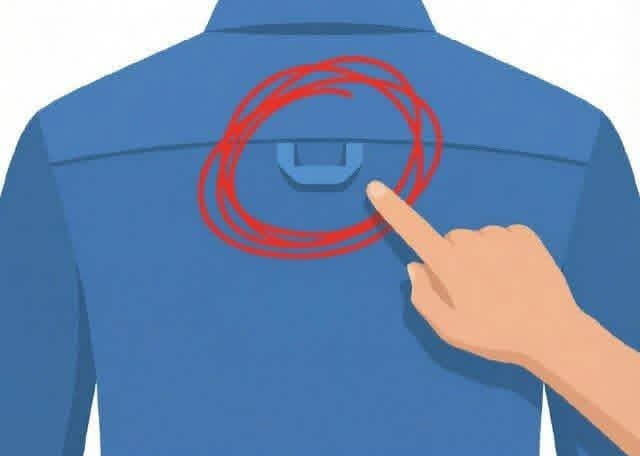
Where the Locker Loop Really Comes From
The origin of the locker loop traces back to the U.S. Navy in the early 1900s. Sailors lived in extremely tight quarters aboard ships, where storage space was limited and personal lockers were small. Clothing had to be stored efficiently, kept off the floor, and allowed to dry properly.
The solution was simple but clever: shirts were designed with a sturdy loop sewn into the back so they could be hung on hooks inside lockers. This helped prevent wrinkles, improved air circulation, and kept garments accessible without needing hangers, which took up valuable space.
The design worked so well that it quickly became standard in military apparel.
From Navy Ships to College Campuses
After World War II, the locker loop made its way into civilian clothing—especially men’s casual and athletic wear. In the 1950s and 1960s, American clothing brands embraced the feature, and it became especially popular on Ivy League and prep-style button-down shirts.
On college campuses, locker loops served a practical purpose for students who stored clothes in gym lockers or dorm rooms. Over time, though, the loop took on an unexpected social meaning.
Some students would cut the loop off their shirts to signal they were “taken” or in a relationship. Others would intentionally tug or remove someone else’s loop as a form of flirtation—or rivalry. While these traditions weren’t universal, they added a layer of cultural symbolism to what had once been a purely functional detail.
Does the Loop Still Have a Purpose Today?
In modern fashion, the locker loop is rarely essential. Most people hang shirts on hangers and never use the loop at all. Yet many brands still include it as a nod to tradition, classic menswear, and vintage design.
Today, the loop represents:
Heritage craftsmanship
A connection to military and collegiate history
A subtle design detail that distinguishes quality shirts
Some high-end and heritage brands keep the loop for authenticity, while others remove it for a cleaner, minimalist look.
A Small Detail With a Big Story
What looks like an insignificant strip of fabric turns out to be a quiet reminder of history—of sailors at sea, crowded lockers, postwar college life, and the evolution of everyday fashion. It’s a perfect example of how functional design choices can survive for generations, even after their original purpose fades.
So the next time you put on a button-down shirt, take a second look at that tiny loop on the back. It may not hold your shirt anymore—but it’s still holding onto a century’s worth of stories.