Most Do This Wrong: 10 Foods You’re Storing in the Wrong Container
In our everyday rush to unpack groceries and clear the counter, food storage often becomes an afterthought. We toss items into whatever container is nearby, assuming cold temperatures or sealed lids are enough. But the truth is, the container you choose can make or break the freshness, flavor, and even nutrition of your food.
Many common foods are stored incorrectly in millions of homes, causing them to spoil faster, lose taste, or absorb unwanted odors and moisture. The good news? A few simple changes can dramatically improve how long your food lasts—and how good it tastes.
Let’s take a closer look at 10 foods most people store the wrong way and what you should do instead.
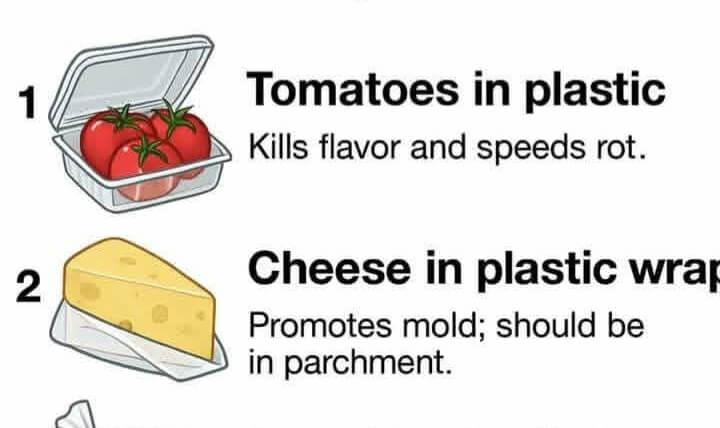
1. Tomatoes in Plastic: A Recipe for Ruin
What goes wrong:
Plastic traps moisture and limits airflow. This causes tomatoes to become mushy and dull in flavor.
Why it matters:
Tomatoes continue to ripen after harvest. Plastic containers interrupt this process and encourage rot.
Store them right:
Keep tomatoes uncovered or in a breathable bowl
Store at room temperature, stem-side down
Refrigerate only if fully ripe and you must slow spoilage
2. Bread in the Refrigerator: Dry and Tasteless
What goes wrong:
Cold temperatures cause bread to stale faster due to starch crystallization.
Why it matters:
Refrigeration dries bread out long before mold would appear.
Store it right:
Keep bread in a bread box or paper bag
Store at room temperature for short-term use
Freeze sliced bread for long-term storage
3. Potatoes in Plastic Bags: Sprouting Trouble
What goes wrong:
Plastic traps moisture and gases that speed up sprouting and decay.
Why it matters:
Moist environments encourage mold and rot.
Store them right:
Use a paper bag or open basket
Store in a cool, dark, well-ventilated place
Keep away from onions
4. Onions Next to Potatoes: A Bad Pair
What goes wrong:
Onions release moisture and gases that cause potatoes to spoil faster.
Why it matters:
Together, they shorten each other’s shelf life.
Store them right:
Store onions in a mesh bag or open container
Keep them separate from potatoes
Avoid airtight containers
5. Coffee in the Original Bag: Flavor Loss
What goes wrong:
Coffee absorbs air, light, and moisture easily, losing aroma and taste.
Why it matters:
Oxygen is coffee’s biggest enemy.
Store it right:
Use an opaque, airtight container
Store in a cool, dark cabinet
Avoid the refrigerator and freezer for daily use
6. Leafy Greens in Sealed Plastic: Slimy Leaves
What goes wrong:
Sealed plastic traps moisture, causing greens to rot quickly.
Why it matters:
Excess moisture leads to bacterial growth.
Store them right:
Wrap greens in a paper towel
Place in a vented container or produce drawer
Replace paper towels if damp
7. Berries Washed Too Soon: Mold Magnet
What goes wrong:
Washing before storage introduces moisture that accelerates mold growth.
Why it matters:
Berries are delicate and spoil fast when wet.
Store them right:
Store unwashed
Use a breathable container
Wash only right before eating
8. Cheese in Plastic Wrap: Suffocated Flavor
What goes wrong:
Plastic traps moisture and prevents cheese from breathing.
Why it matters:
Cheese needs airflow to maintain texture and flavor.
Store it right:
Wrap in wax paper or parchment
Place in a loosely sealed container
Store in the cheese drawer if available
9. Honey in Plastic: Unnecessary Risk
What goes wrong:
Plastic can absorb odors and may degrade over time.
Why it matters:
Honey lasts indefinitely if stored correctly.
Store it right:
Use a glass jar with a tight lid
Store at room temperature
Never refrigerate
10. Cooked Leftovers in Shallow, Open Containers
What goes wrong:
Improper containers lead to faster bacterial growth and drying out.
Why it matters:
Food safety and taste both suffer.
Store them right:
Use airtight glass containers
Cool food quickly before sealing
Label with dates and use within 3–4 days
Final Takeaway
Food storage isn’t just about convenience—it’s about preserving flavor, nutrition, and safety. By choosing the right containers and storage conditions, you can:
Reduce food waste
Save money
Enjoy better-tasting meals
A few small changes in your kitchen habits can make a big difference.