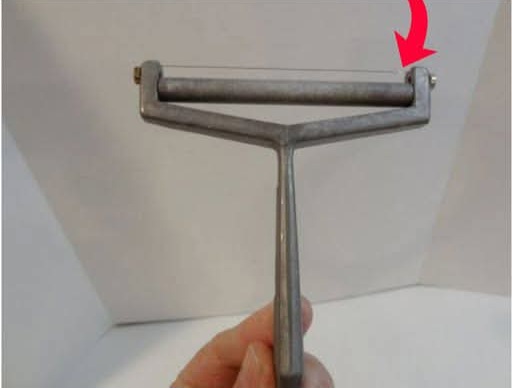
Vintage Presto Aluminum Cheese Slicer (1940s–1950s)
The Vintage Presto Aluminum Cheese Slicer is a classic mid-20th-century kitchen gadget designed to make thin, even slices of cheese quickly and easily. Popular in American kitchens during the 1940s and 1950s, it reflects a time when tools were built to be simple, durable, and practical.
What It Is
This gadget is a handheld cheese slicer made mostly from aluminum with a thin cutting wire or blade stretched across the head. It was created to slice semi-hard cheeses—like cheddar or Swiss—into smooth, uniform slices for sandwiches and snacks.
Key Features
1. Lightweight aluminum body
Aluminum was commonly used in mid-century cookware because it’s durable, rust-resistant, and light.
2. Comfortable handle
The handle is shaped so it fits nicely in your hand, allowing you to press and slide the slicer across a cheese block smoothly.
3. Wire cutting edge
Instead of a knife blade, many of these slicers use a thin metal wire that glides through cheese without tearing it.
4. Consistent slices
The design helps create even slices every time, which is perfect for sandwiches or cheese platters.
How It Works
Place the slicer at the edge of a block of cheese.
Hold the handle and pull or push the slicer across the surface.
The thin wire cuts through the cheese.
A uniform slice lifts away from the block.
The result is a neat slice with minimal effort.
Why It Was Popular
During the mid-1900s, kitchen tools focused on efficiency and convenience. This slicer allowed home cooks to:
Slice cheese faster than using a knife
Get perfect sandwich slices
Avoid crumbling softer cheeses
Vintage Appeal Today
Collectors and vintage kitchen fans love this tool because it represents mid-century American design:
Simple engineering
Durable materials
Retro diner-style charm
You’ll often see these slicers in antique shops, flea markets, or vintage kitchen collections.
Fun fact:
Tools like this were especially popular when block cheese was more common than pre-sliced packaged cheese, which didn’t become widespread until later.